
How do you combine multiple artworks on the wall? Advice on composition and balance
Are you looking for ways to beautifully bring different artworks together on your wall? Combining artwork can bring a room to life and powerfully express your personal style. Carefully curated walls create ambiance and tranquility, provided you pay attention to composition, balance, color, and proportion. This article offers practical advice and inspiring tips, aimed at women aged 25–55 who want to decorate their home with style.
Start with a rest point or central work
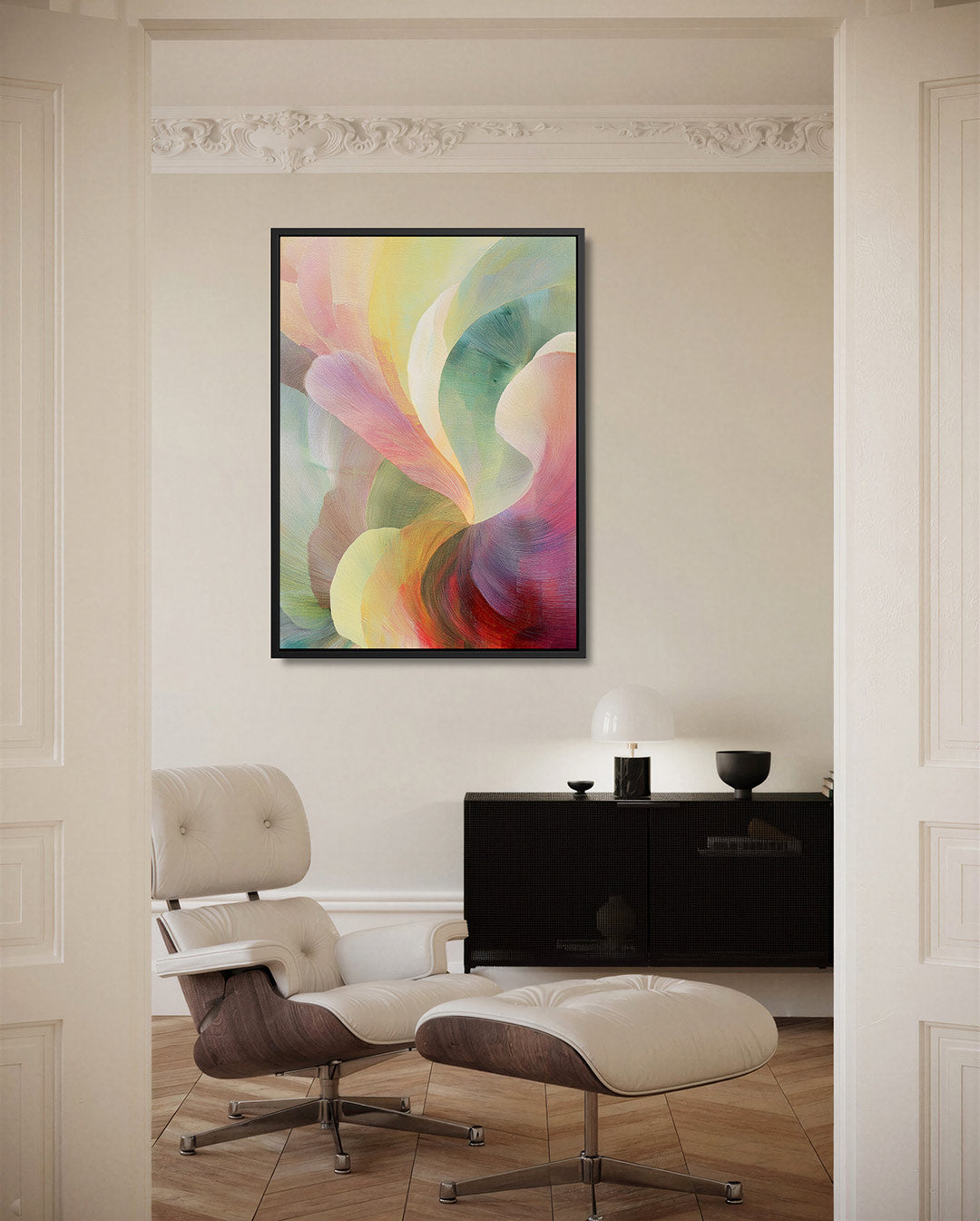
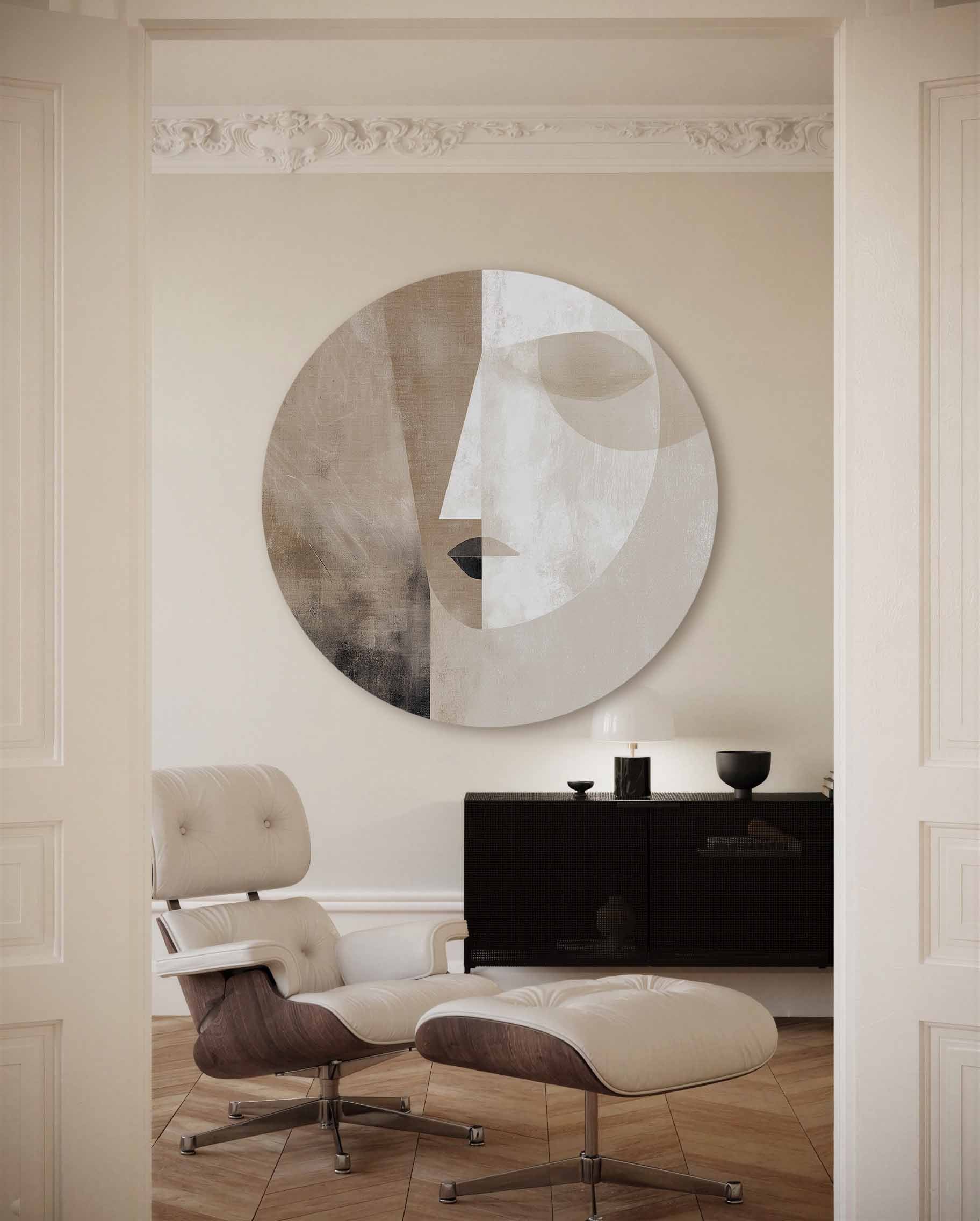
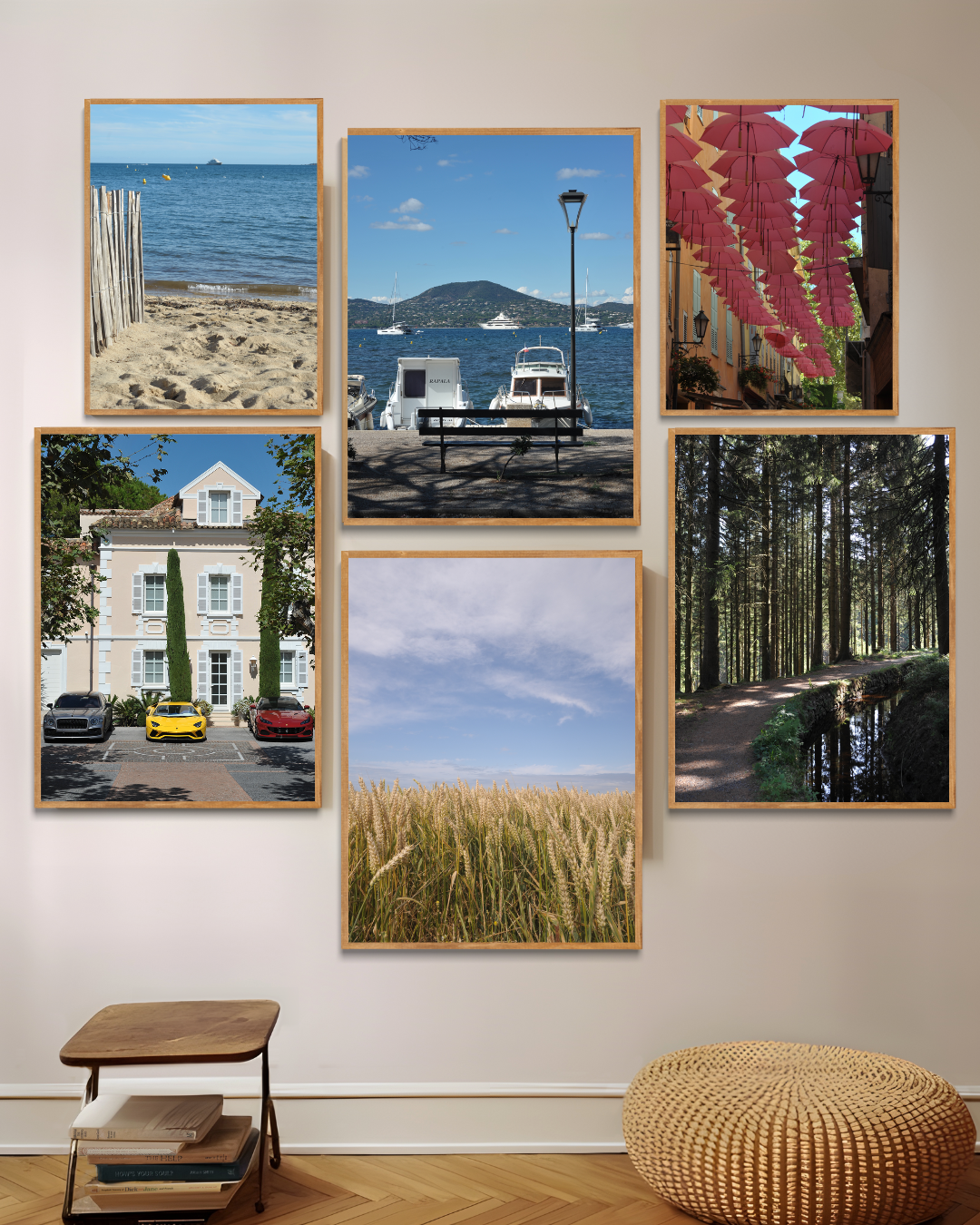
Whether you prefer modern prints, vintage paintings, or personal photos, a well-thought-out arrangement always begins with a single work as a focal point. This central piece serves as the anchor of the composition. By choosing a more striking work, such as a canvas with vibrant colors or a large black-and-white photo, you immediately create focus. This "main artwork" sets the rhythm for the rest of the room.
- Choose the work that first draws your attention.
- Place it centrally or let it match the striking lines in your interior.
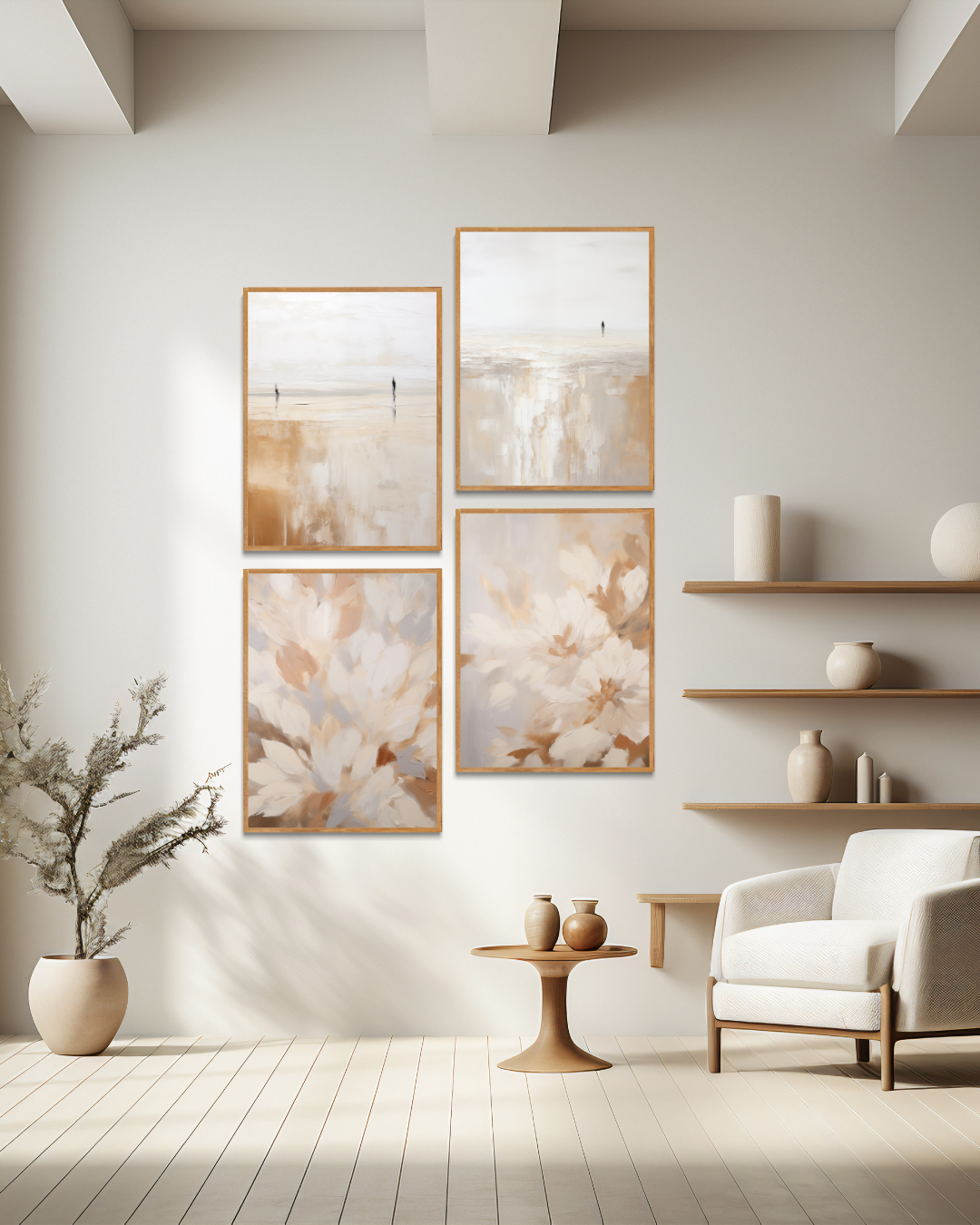
- Would you prefer symmetry in your home? Then use two or four pieces opposite each other for a calm, balanced look.
Ensure visual balance between artworks
After choosing an anchor point, balance is key. Visual balance means that the whole doesn't look "heavy" on one side, but is harmoniously distributed.
- Alternate large and small works, but make sure the overall picture doesn't become too busy.
- Avoid randomly combining tall and wide works; coordinate the shapes accordingly.
- Try to place heavy, full colours at the bottom of the composition, while lighter shades can hang above.
This way of combining artwork on the wall prevents your wall from looking too bulky. The right layout also creates a sense of calm and spaciousness.
Use even spacing between artworks
Women with an eye for detail know that the distance between frames is just as important as the art itself. As a rule of thumb, allow 6 to 8 centimeters between works.
- Too much space makes the composition cluttered; too little space makes it look busy.
- Align the tops or bottoms of some works for added structure.
- You can achieve a harmonious whole by maintaining the same spacing throughout the entire arrangement.
This creates a clear structure in your gallery wall. It looks neat and calm, contributing to a pleasant and inviting atmosphere in your living space.
Optical weight: colours and shapes in balance
Not every artwork has the same visual weight. A large, dark painting feels much heavier than an airy watercolor. Keep these differences in mind when combining artworks on the wall.
- Place larger or darker works at the bottom of the arrangement, lighter or smaller ones at the top.
- Make sure that the overall picture does not become unbalanced on one side by too many heavy tones.
- If necessary, work with a diagonal line from light to heavy works for dynamism and balance.
This principle provides rest for the eye and makes a composite wall aesthetically attractive.
Hang artworks at eye level
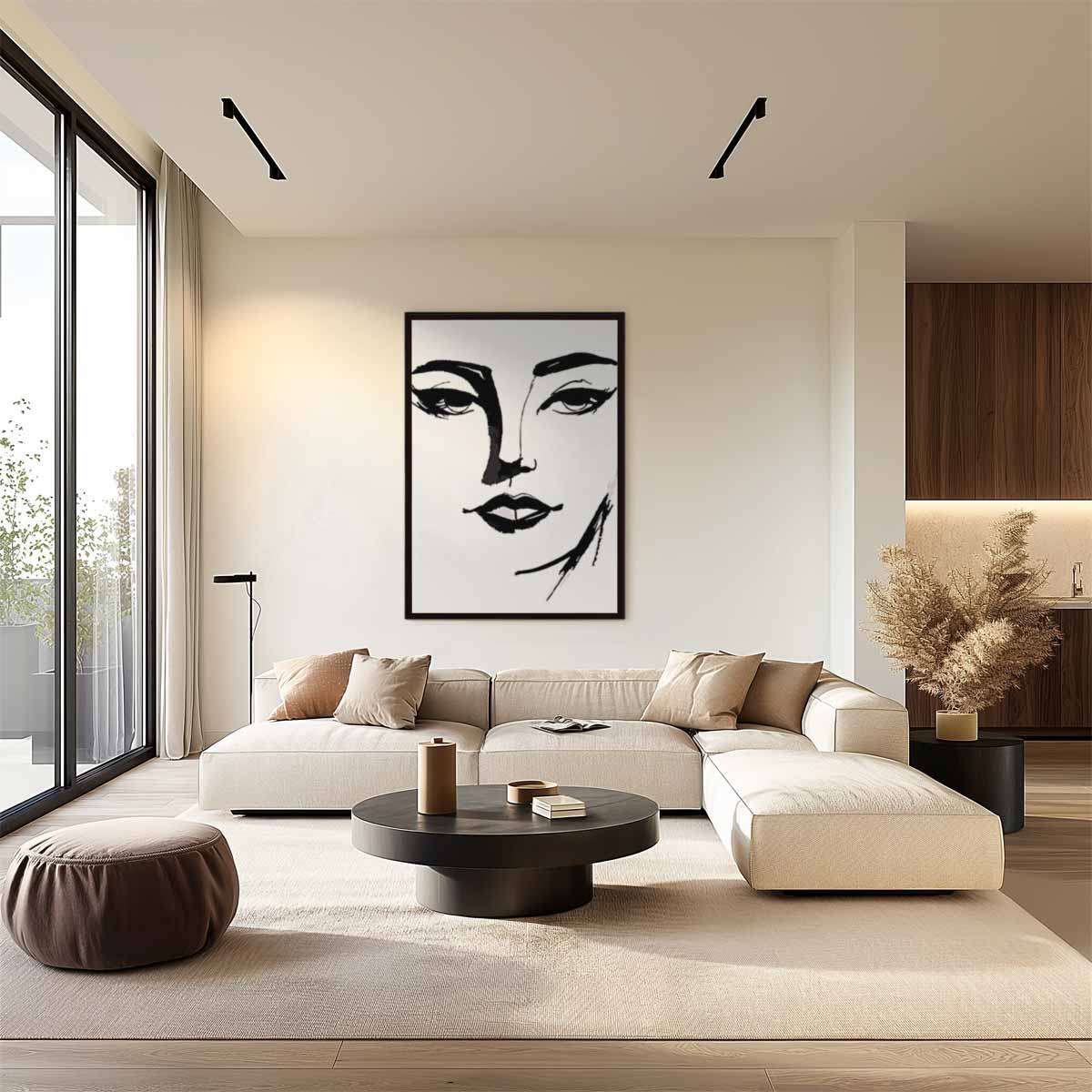
For a professional look, hang artwork at the right height. Eye level is the starting point: the center of the central work should be approximately 145 centimeters from the floor.
- With a collage or a gallery wall you take the visual centre as a basis.
- If you're displaying artwork above a piece of furniture, maintain a distance of approximately 20 to 25 centimeters between the furniture and the bottom of the artwork below.
This prevents the works from hanging too high or too low and allows the wall to seamlessly fit into your interior.
Proportions and sizes: combine artworks harmoniously
A mix of formats provides variety and spice, but requires some direction.
- Don't just combine square or elongated works, but vary consciously.
- Coordinate the sizes so that the whole and the individual works reinforce each other.
- A rectangular composition or a strict grid helps with organization.
Rectangle or grid: practical composition tips
- A rectangular layout exudes tranquility and fits well above a sofa or sideboard.
- A symmetrical grid (for example 3 x 3 squares) looks clean and modern, ideal for uniformly framed artworks.
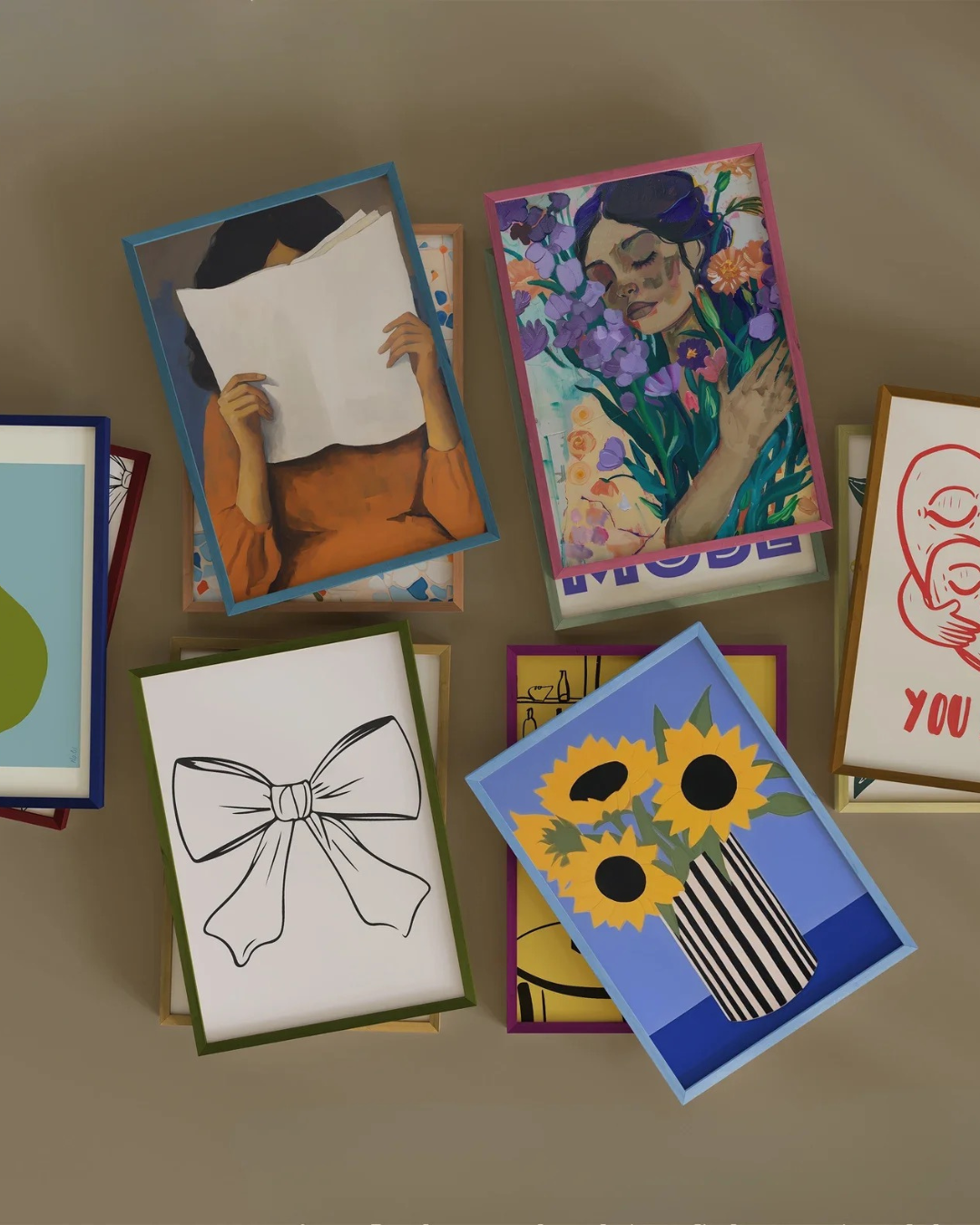
Feel free to play around with mockups on the floor before hanging your artwork. This way, you'll see which layout best suits your style and space.
Color and style: coherence without predictability
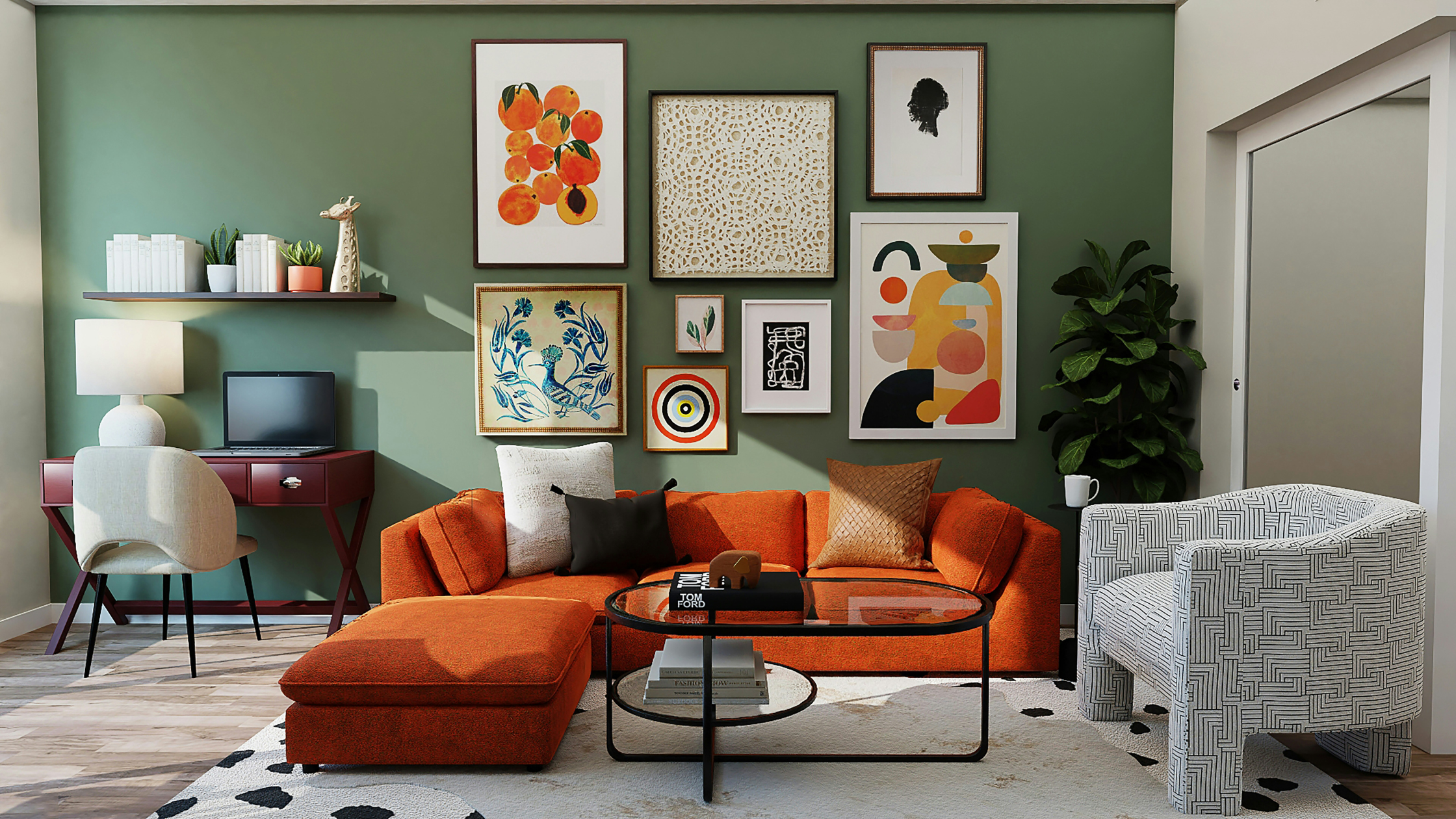
Consistency is essential, but uniformity isn't absolutely necessary. Combining artwork effectively on the wall primarily means considering color tones, lines, and themes.
- Choose works in the same color family or connect them with one shade that is repeated throughout.
- Whether you combine abstracts with landscapes, ensure there is a line, texture, or theme that gives the collection unity.
- Avoid excessive contrasts for a calm overall look.
This balance makes your wall personal, full of character and at the same time calming to the eye.
Light and material: making the most of them
When hanging art, lighting is at least as important as the works themselves.
- For matte artwork, choose indirect light to prevent fading and reflection.
- When using plexiglass or high-gloss frames, pay extra attention to reflections: avoid direct sunlight and bright spotlights.
- When hanging art on a wall with plenty of daylight, it's best to hang it on the north or east side of the room for subtle light.
This way, not only does the material remain beautiful, but you can also enjoy your art collection to the fullest.
Assembly and structure: avoid regrets later
Before you start drilling, first create a visual plan. A mistake is easily made, but it would be a waste of your walls and artwork.
- First, place the artworks on the floor in the desired composition.
- Use masking tape on the wall to recreate the shapes. This way, you can see the effect without creating holes.
- Satisfied? Then adjust the height of the hanging hooks and work precisely. Use a spirit level or laser system for straight lines, if necessary.
With this approach, you can be sure that your combined artwork will be perfectly aligned and balanced on the wall.
Conclusion
Combining artwork on your wall requires attention to detail, but it creates a stylish and personal ambiance. Follow these step-by-step tips, take your time, and enjoy the process—you'll find your wall becomes the new focal point of your home.

Leave a comment
This site is protected by hCaptcha and the hCaptcha Privacy Policy and Terms of Service apply.